
How to Optimise for AEO (Answer Engine Optimization)?
To optimise for AEO (Answer Engine Optimization), start by understanding the questions your audience asks, then create clearly structured, Q&A-based content that gives direct, concise answers supported by schema markup and strong technical SEO. This combination boosts your visibility in AI-powered answer boxes, voice search, and zero-click search results.
Identify User Intent and Questions
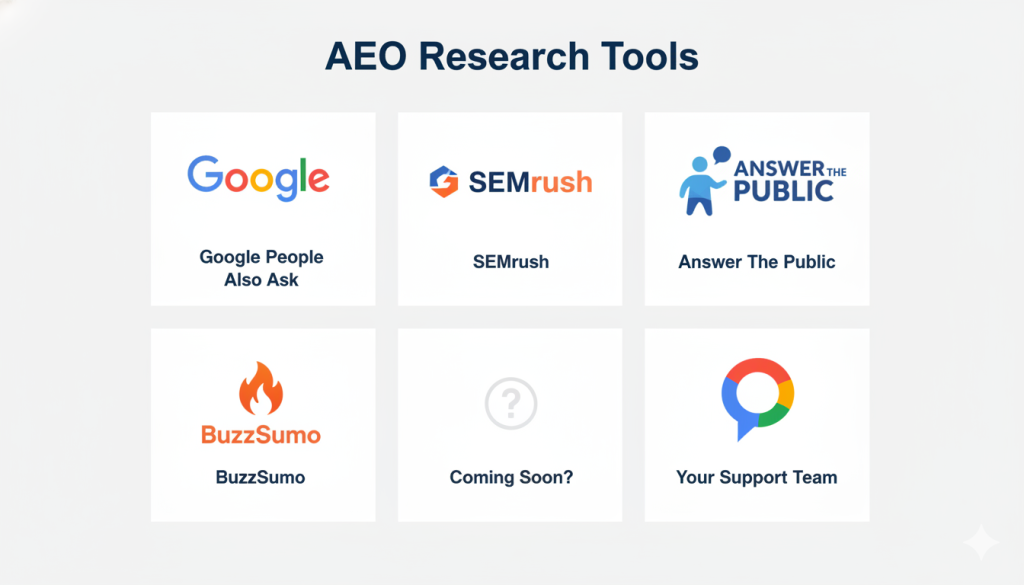
Before you write, consider: What specific questions do your customers type or speak when searching for your product or service? Use tools like Google’s People Also Ask, Answer the Public, and SEMrush to find common questions. Chatting with your sales or support teams can surface additional, real-life questions not captured by keyword databases. For example, U.S. and Canadian companies often find a mix of how-to, comparison, and definition queries about their services.
Examples of Discovery Tools
- Google’s People Also Ask
- SEMrush (for keyword and question analysis)
- BuzzSumo (content performance insights)
- On-site search logs and FAQ submissions
Structure for Direct, AI-Friendly Answers
AI and answer engines prefer content formatted with clear logic and hierarchy. Here’s how to create content that stands out:
1. Use Question-Based Headings
- Begin each section with a specific question (e.g., “How does AEO work?”)
2. Provide Concise, Upfront Answers
- Summarize the answer within 40-60 words at the start
- Support the quick answer with additional context, lists, and real-world examples
3. Make Information Easily Scannable
- Use bullet points and short paragraphs
- Include tables for comparisons
- Group related questions together
4. Implement FAQ and How-To Sections
- Dedicate a section or page to top questions for increased snippet selection opportunities
AEO Content Comparison Table
| Practice | Impact on AEO | Example |
|---|---|---|
| Q&A headings | Increases snippet chances | “How to…” section |
| Schema markup | Improves AI visibility | FAQPage, HowTo |
| Structured lists/tables | Easier for AI to extract | Pros/cons lists |
Boost Technical and Off-Site Authority
Strong answer engine performance comes from more than text. Here’s what to prioritize:
- Schema Markup: Implement FAQPage, HowTo, and Article schema for major questions
- Mobile and Site Speed: Ensure fast, intuitive mobile experiences
- Trusted Backlinks and Reviews: These enhance trust and help answer engines rank your content higher
- Consistent Business Listings: Update profiles on platforms like Google My Business
Monitor and Refine AEO Performance
You might be wondering: Once my site is optimised, how do I know if it works? Monitor featured snippet wins, FAQ appearances, and track AI-powered results using tools like Ahrefs or Moz. Check how often your brand is directly cited in AI summaries or voice results.
Actionable Steps to Get Started
- List your top 10 user questions using discovery tools
- Create a Q&A format for each main page, with schema markup
- Analyze which answers appear in People Also Ask boxes
- Update content regularly to keep it relevant and accurate
Key Things to Remember
- Focus on real, specific questions your audience is asking
- Format content so both humans and AI can quickly identify answers
- Leverage schema markup and mobile-friendly design
- Build trust with quality backlinks and customer reviews
- Test and monitor for continual improvement
Businesses that implement these steps now benefit as users increasingly rely on zero-click, conversational search. In fact, advanced SEO tactics, including AEO, influence more than 40% of all online revenue3.