
How to Rank in Google AI Overview?
Ranking in Google AI Overview means optimizing your website for both traditional SEO and new AI-centric factors that determine what content Google’s generative models select and summarize at the top of search results. For businesses and publishers in Canada, the United States, and worldwide, earning a spot in AI Overviews can drive visibility—even for pages not ranked in the top 10, since over 52% of citations still come from the first page, but many are pulled from elsewhere in the search index1.
What Influences Google AI Overview Rankings?
Google AI Overviews assess content using a mix of familiar ranking criteria and new signals tuned for AI models. Here’s how these factors compare:
| Ranking Factor | Why it Matters |
|---|---|
| Core SEO signals | Traditional metrics like PageRank and Helpful Content remain influential. |
| User search intent | Content that fully resolves a user’s need is prioritized. |
| Content quality | In-depth, accurate, well-structured content is more likely to be chosen. |
| Authority & trust | High-reputation domains with backlinks and positive mentions shine. |
| Structured data | Schema markup, tables, lists, and Q&A format help AI parse your site. |
| Freshness | Updated, timely information gets favored for visibility. |
| Topical depth | Comprehensive coverage and strong internal links boost authority. |
Actionable Steps to Rank Higher
To improve your chances of appearing in Google AI Overview, try these proven strategies:
1. Start with User Intent
- Go beyond keywords—write content that directly answers what people are searching for.
- Anticipate follow-up questions, provide clear explanations, and address real user problems.
2. Structure Your Content for AI
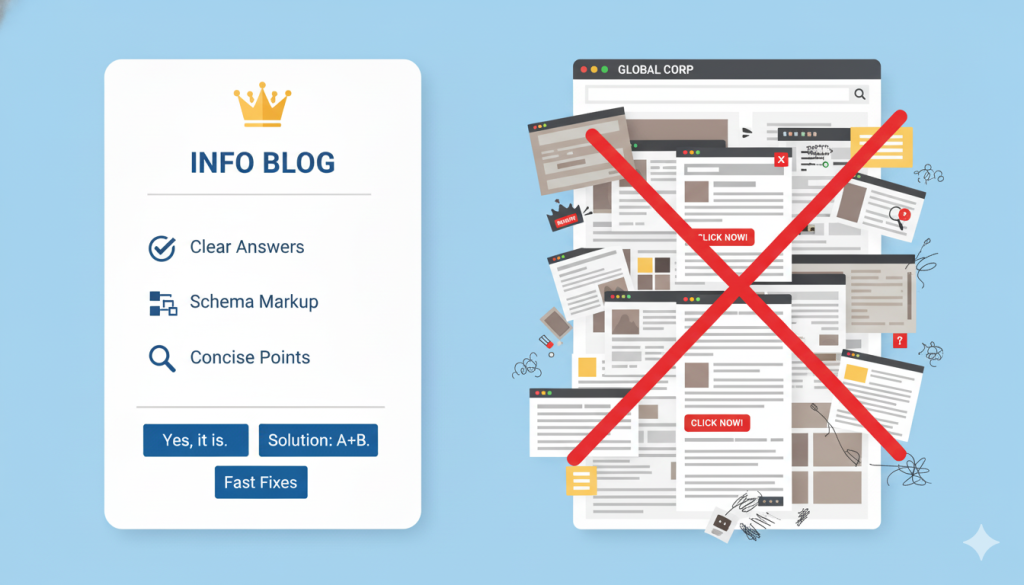
- Use clear section headers (H2/H3) for every topic or question you answer.
- Front-load your answers: summarize key points in the first sentence, then expand with supporting info.
- Bullet points, numbered lists, and tables make your content easy for AI to scan and summarize.
3. Use Schema and Q&A Formats
- Add FAQ, HowTo, Product, or LocalBusiness schema to help Google understand your content and context.
- Incorporate “People Also Ask” style sections and answer related questions within your topics.
4. Build Authority and Reputation
- Seek quality backlinks from reputable sites in your field.
- Encourage reviews and testimonials on your product or service pages.
- Highlight author experience and credentials wherever possible.
5. Refresh and Expand Your Content
- Update articles regularly with new information, stats, and perspectives.
- Cover topics in-depth using interconnected articles; build robust internal linking across your site.
6. Diversify With Visuals
- Add images, infographics, or quick explainer videos—AIOs are starting to blend in multimedia to provide richer answers.
Common Related Questions
You might also wonder: “Can smaller websites rank in AI Overview?” Absolutely—if your content is more helpful, better structured, or directly answers unique queries, Google can reference your site no matter your domain’s size.
Another frequent question is: “How do I know if my article is featured in AI Overviews?” While Google doesn’t directly notify you, keep an eye on traffic spikes in Google Search Console for target queries, and use third-party tools as they become available.
Key Things to Remember
- Prioritize expert, people-first content with clear, organized answers.
- Optimize your site technically—use schema, fast loading, and mobile friendliness.
- Monitor performance and iterate as Google’s AI Overview evolves.
Staying ahead in the SEO game now means thinking like both a human and an AI reader. By blending tried-and-tested optimization with next-gen strategies, you set your website up for future success in an AI-driven search landscape.
